How student entrepreneurs connect to the Oslo Science Park ecosystem

Published: 21 September 2026

Text: Anne-Marie Korseberg Stokke

Photo: Anne-Marie Korseberg Stokke

UiO iHub is a meeting place and shared office space for students at the University of Oslo who work on innovation and entrepreneurship. "Being physically close to, and having informal contact with, the startup communities at Oslo Science Park is absolutely crucial for new founders to succeed," they say.

iHub currently houses three initiatives: the student incubator Insj UiO, the entrepreneurship programme Co-Create, and the internship programme Momentum UiO. From their centrally located premises in Oslo Science Park, they look out onto both the busy glass-covered street and into Startuplab's offices.

"Hi there! Come on in! Would you like something to drink?"

Jakob Fallaas, deputy head of the student incubator Insj and the person who manages iHub's premises, is friendliness itself. Behind the glass walls, they have created a cross between a typical startup office and a student club. Here, innovative UiO students can work on their startup or project during the day and in the evening.

"We've worked on making it cosy here, with plants and a sofa and so on, and we've also added more workstations. Some days it's completely full."

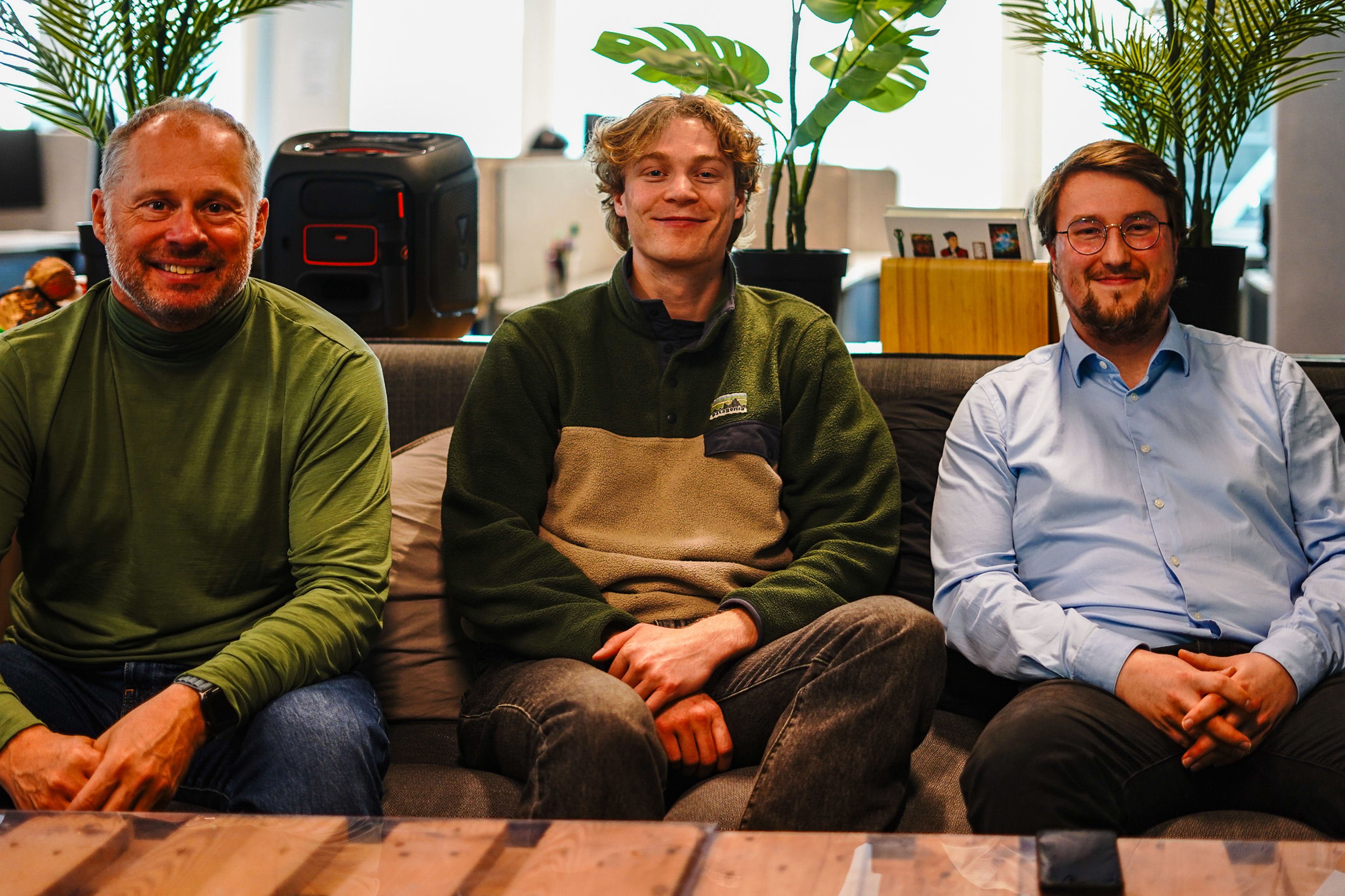
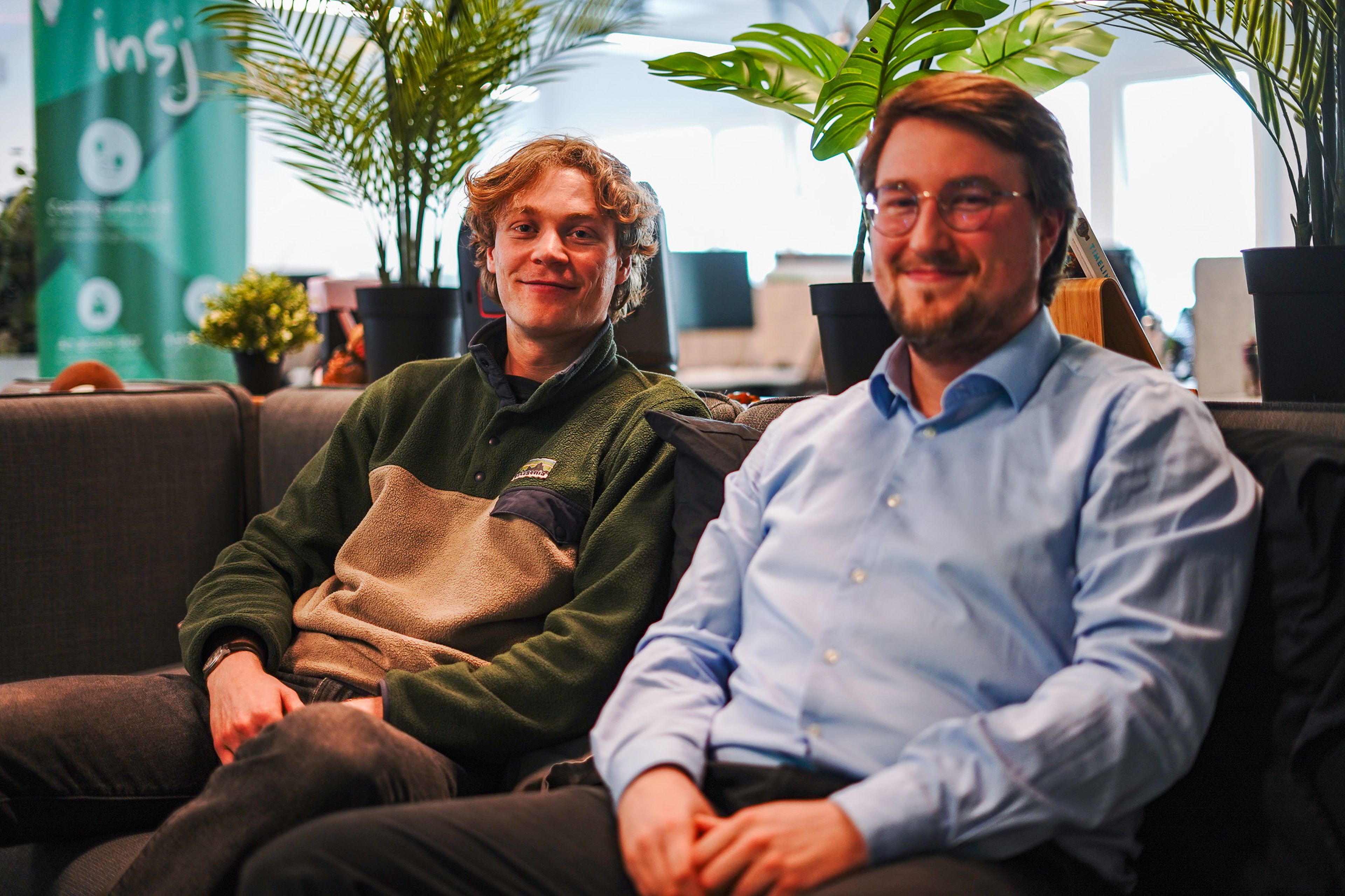
Hans Terland and Jakob Fallaas thrive in Oslo Science Park.

"But why are you here at the Science Park and not at Blindern or another UiO campus, where students might have a shorter trip?"

"It's actually partly about the positive associations you get, and about feeling the energy that's here. Just being able to see straight into Startuplab is inspiring in itself. And seemingly trivial things, like getting your own access card to Oslo Science Park, mean something to student founders!"

"Then there's the practical advantage of being close to relevant communities. You feel a bit more like colleagues here, rather than just students visiting. It's much easier to pop your head into a startup and ask if they have a few minutes than to arrange a meeting by email," says Fallaas.

In addition to their own concrete experience, iHub can also draw on several master's theses when emphasising the value of a physical meeting place. One thesis on student incubators, based on Insj, concluded among other things that the greatest benefit did not come from the advice participants received, but from being gathered at UiO iHub in close contact with other startups and the surrounding ecosystem.

"The ice is already broken, in a way, when you're standing in line for coffee together.

From one of the workshops in Co-Create.

Sharp rise in student startups

Just under 30 projects are currently affiliated with Insj. That is a significant increase from 10 projects in 2025 and 13 at the start of 2026. Hans Terland, head of Insj, is pleased that more and more students want to work on their own startup.

"Several of the projects originated in Co-Create workshops, and some have taken part in Startuplab's summer programme or in academic competitions such as iGEM. Traditionally, the majority have come from the Department of Informatics, but we're now seeing more interdisciplinarity, with students on new projects from fields such as psychology, medicine and biology," he says.

Like Fallaas, he also sees the value of being close to industry and the startup community at Oslo Science Park. One example is the many links between iHub and the incubators Startuplab, ShareLab and Aleap.

"We see a good flow of projects and talent both into and out of iHub. In addition to participants in Startuplab's summer accelerator, one company, NIU Sleep, was recently accepted into the health incubator Aleap, just down the hall, and two others have secured places at ShareLab."

At ShareLab, the benefit goes both ways:

"Vitr develops cell-counting technology and got into ShareLab to use the lab as its test environment. While helping other ShareLab members count cells, they were able to validate their solution on real samples. We also have examples where experience from student biotechnology projects has served as a springboard into the ShareLab community, such as the iGEM project Outrun."
Networks are crucial

iHub's activities are run in collaboration with UiO Growth House, including through Insj managing and awarding innovation funding to new student projects on behalf of the Growth House.

Senior innovation adviser Nicolay Bérard-Andersen sees the interaction with the Science Park ecosystem contributing to knowledge transfer and building culture.

"The projects that have been in contact with Startuplab, Aleap or ShareLab benefit greatly from their professional guidance. This is experience they bring back to iHub as role models for the next generation of founders."

From left Nicolay Bérard-Andersen, Hans Terland and Jakob Fallaas.