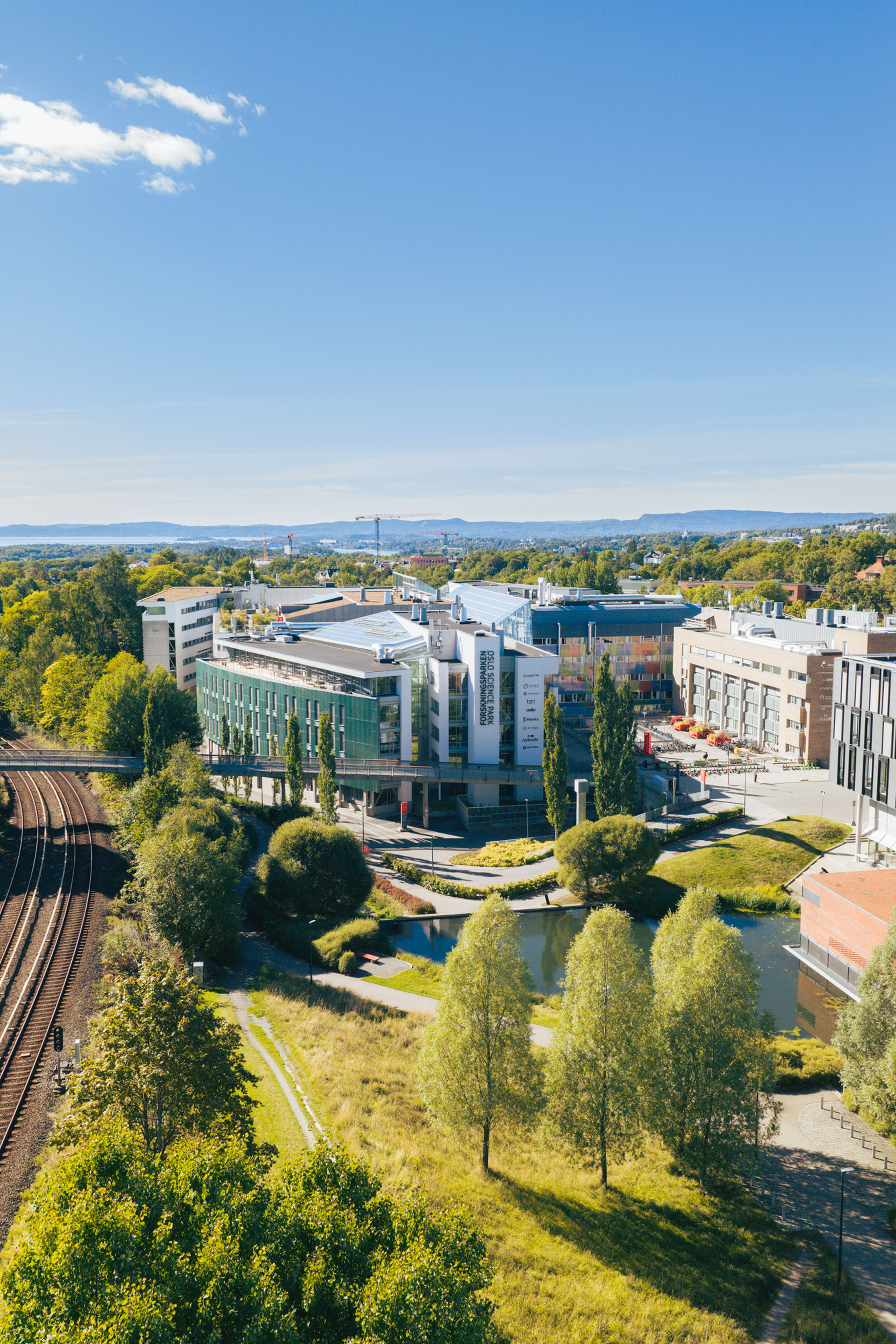
Oslo Science Park renovates Building E

Published: 26 October 2026

Text: Anne-Marie Korseberg Stokke

Photo: Add Arkitekter

One of the original main buildings at Oslo Science Park has remained virtually untouched since it opened in 1989. Now the building is set to be renovated and modernised. Construction begins in January 2027, and the project is scheduled for completion as early as autumn 2027.

The areas of Building E to be renovated total approximately 4,500 square metres and are located on the west side of Oslo Science Park, to the right as you enter through the main entrance. The building currently houses, among others, researchers from the University of Oslo, who will move to the new Life Science Building during 2026.

"The premises the university has occupied since 1990 cannot be leased out in their current state, and now that they are moving out, it's a good opportunity to carry out a major renovation of the entire building," says Ingar Madsen, Director of Real Estate.

UiO Senter for materialvitenskap og nanoteknologi (SNM) blir værende i Forskningsparken med deler av sin forskningsaktivitet. De er ansvarlige for Oslo-avdelingen av NORTEM (The Norwegian Centre for Transmission Electron Microscopy), og har blant annet et stort transmisjonselektronmikroskop installert i nederste etasje av Bygg E. Mikroskopet fyller store deler av gulvet og vil være tilnærmet umulig å flytte, ifølge eiendomsdirektøren.

– Mikroskopet brukes til veldig spennende forskning og er noe vi er stolte av å ha hos oss, men det byr selvsagt også på noen utfordringer knyttet til renovering av bygget. Til nå har vi klart å finne gode løsninger sammen med universitetet, sier Madsen.

Bevarer arkitekturen

Hele Forskningsparken ble i sin tid tegnet av arkitekt Niels Torp og hans kontor har siden den gang vært ansvarlig for alle påbygg. Denne gangen er det imidlertid Add arkitekter som har fått oppdraget med å tegne planene for renoveringen. De ønsker å bevare så mye som mulig av det opprinnelige preget fra byggeåret, samtidig som lokalene åpnes og moderniseres.

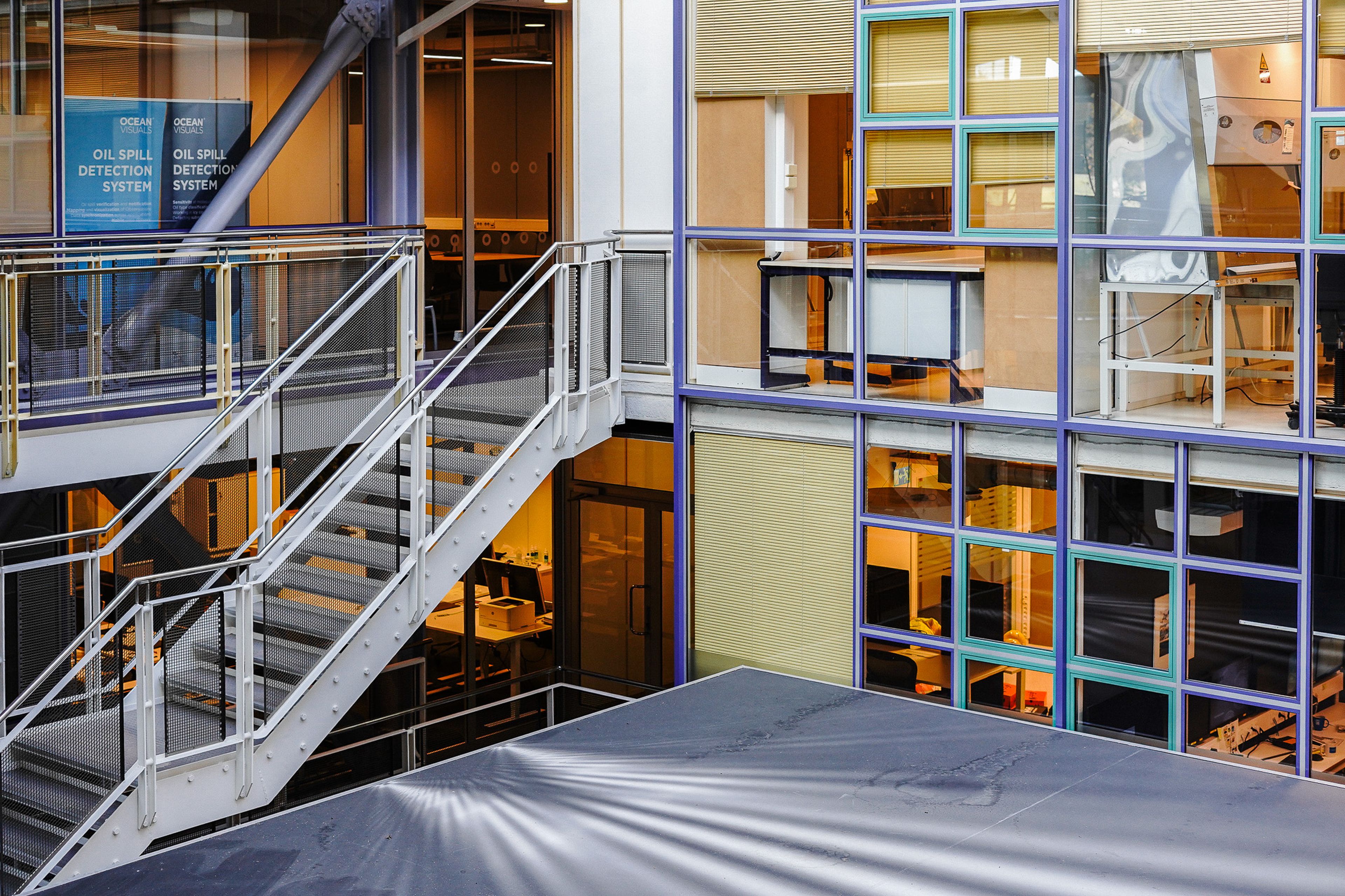
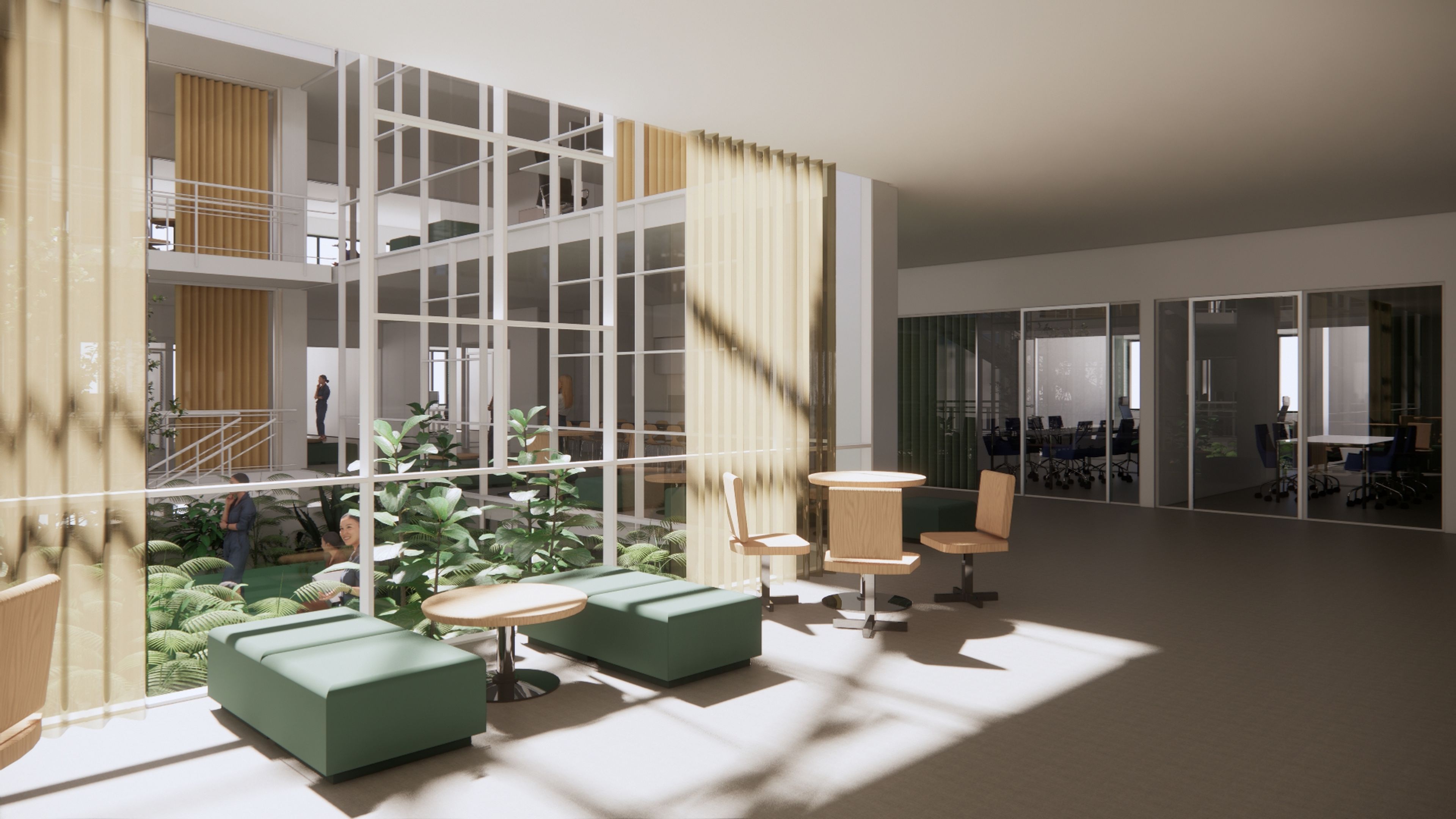
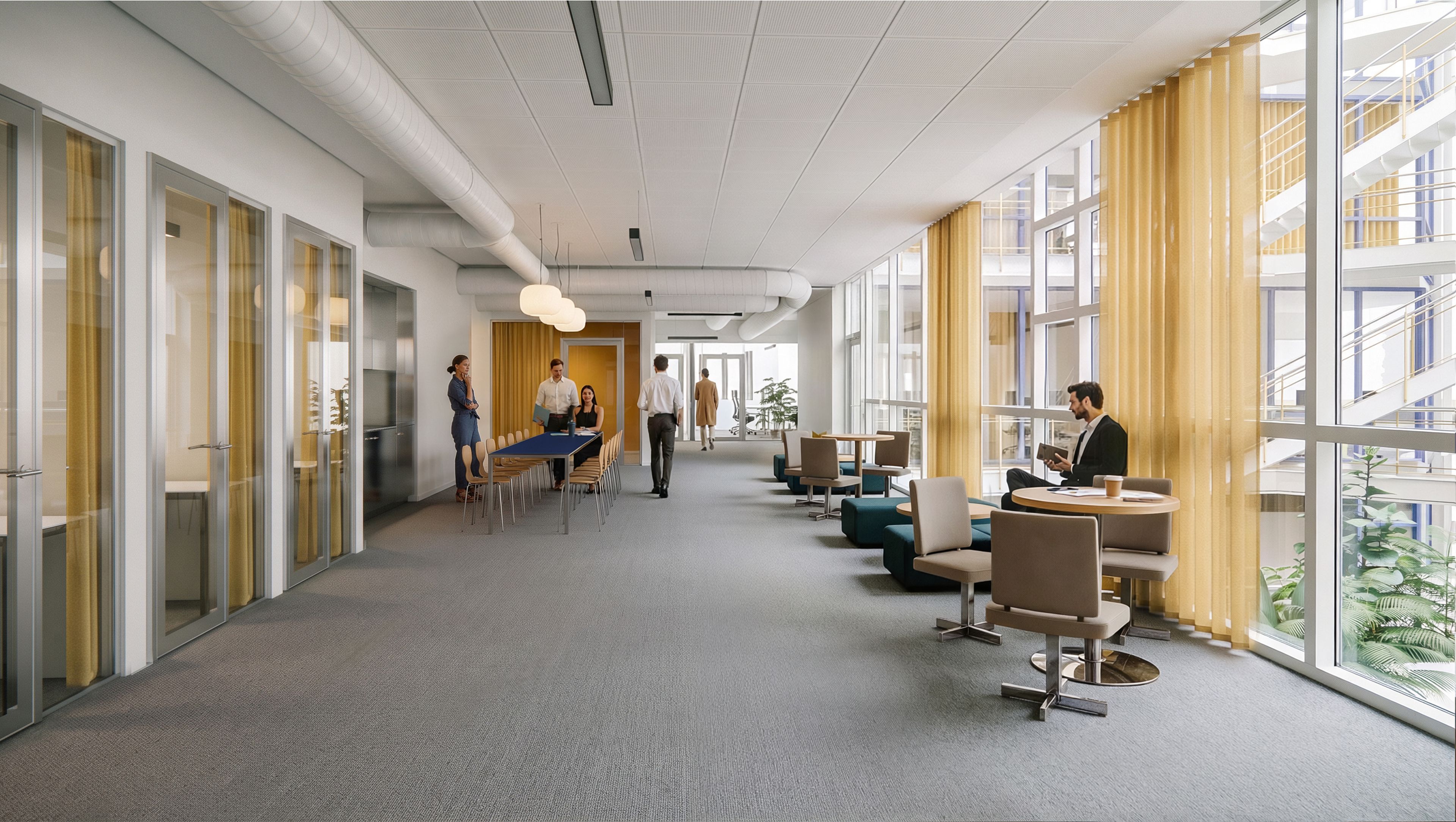
Before
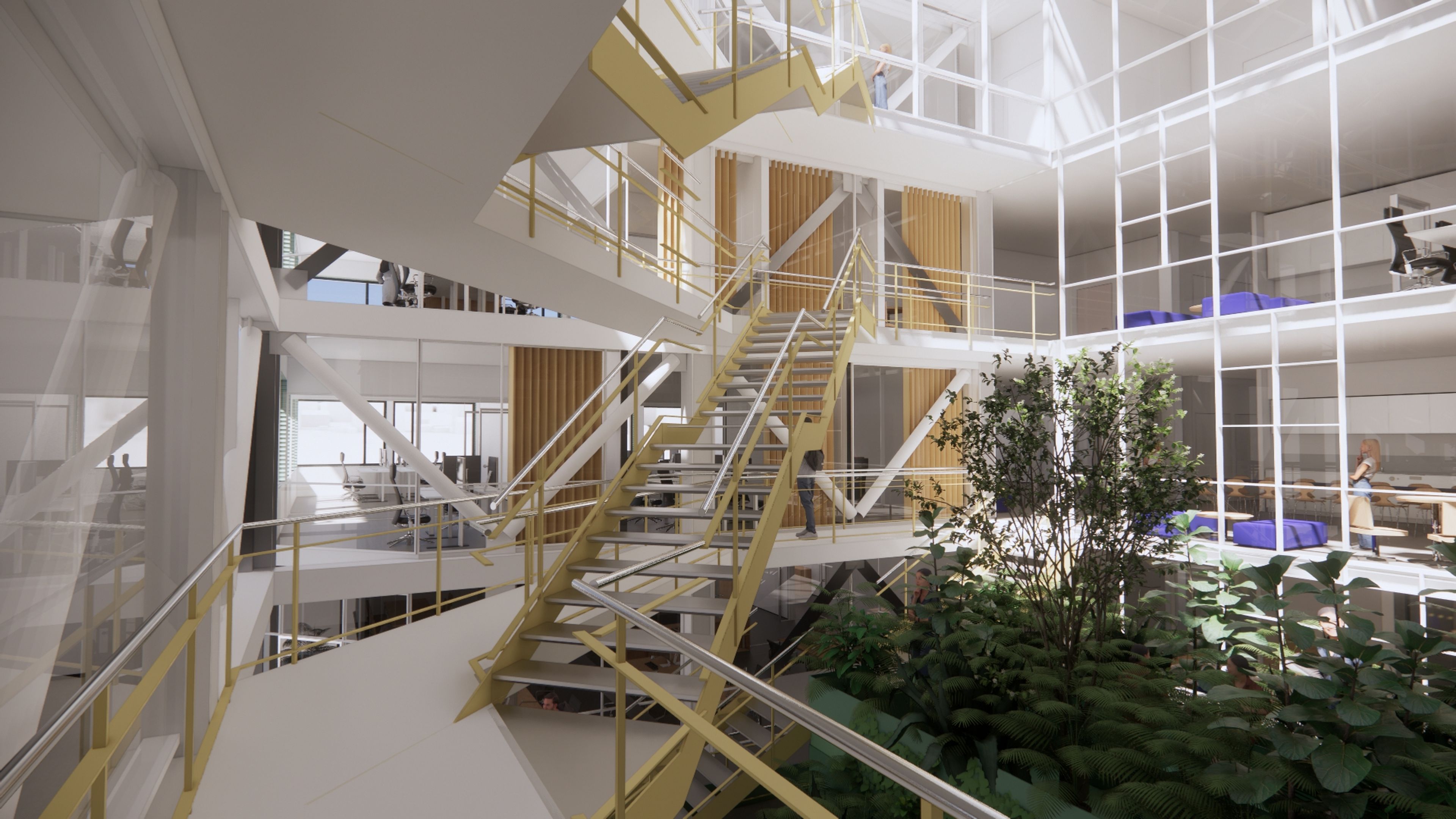
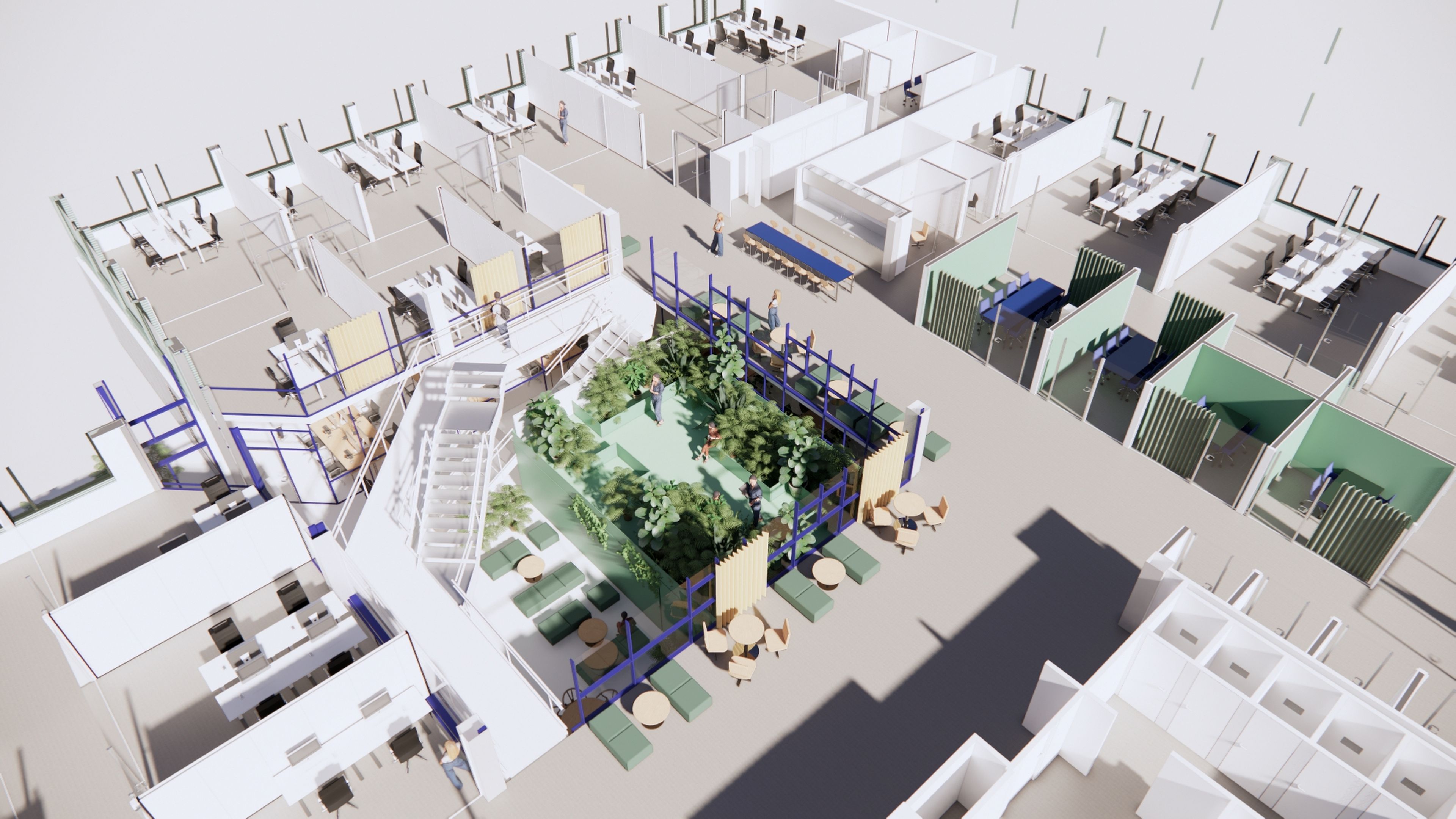
After

“We are keen to highlight the distinctive architectural qualities of the buildings we renovate, and for Building E in particular, that means the technical expression, the inner atrium with its pyramid roof and the bold, period-typical use of colour,” says Tone Rødseth Haugen of Add Arkitekter.

Oslotech AS, which operates Oslo Science Park, will be able to offer newly renovated, modern office space for 1–20 people from autumn 2027. Existing tenants in the building will be offered temporary premises during the construction period.

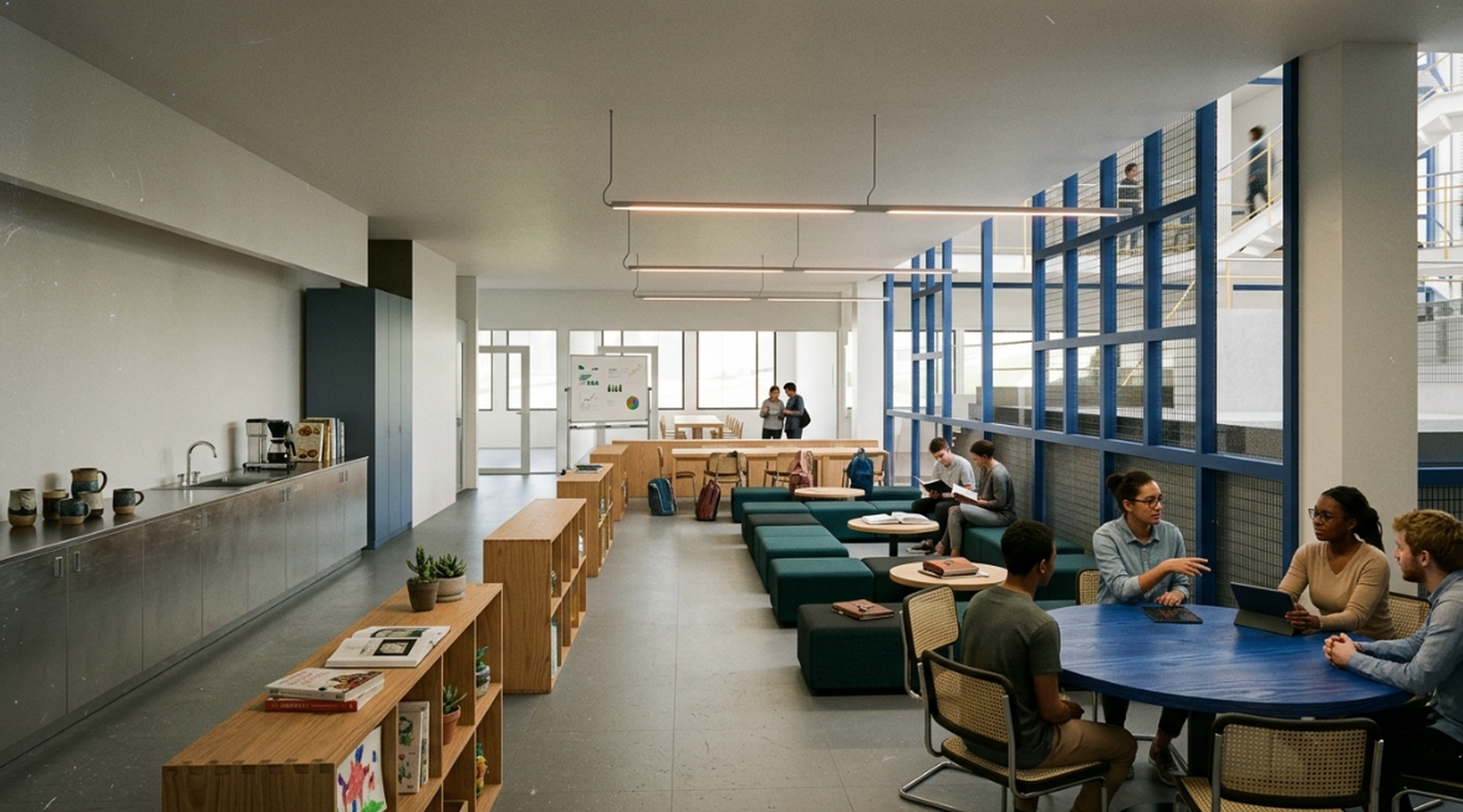
“They will return to bright, modern premises with better air quality and good common areas. For us, it’s important to create space for collaboration and chance encounters. That’s why we’re setting aside a lot of space for open common areas throughout the building, but especially on the ground floor. It will be a wonderful oasis with seating and perhaps something that will come as a bit of a surprise,” says Espen Kildebo Jensen, project manager at Oslotech, mysteriously.

“We will also have a number of vacant premises, so we encourage anyone looking for new offices from autumn 2027 to get in touch,” adds Madsen. “We can offer offices for one person or for several hundred, and there will also be opportunities to set up laboratories.”
Construction period

Following a thorough tendering process, Betonmast was selected as the partner for the construction phase.

“In recent years, Betonmast has completed several extensive renovation and transformation projects in the Oslo region. That experience was important to us,” says Kildebo Jensen.

Stine Aa. Pedersen, Managing Director of Betonmast Oslo, is delighted to have been entrusted with the project.

“This project fits well with our strategy of developing existing buildings through close collaboration, solid delivery expertise and sustainable solutions,” says Pedersen.

To minimise disruption for the approximately 3,000 people who work at Oslo Science Park every day, the noisiest work will, for example, be carried out outside normal working hours.

“Construction projects will always involve some noise and inconvenience for those who use the building daily, but we want to keep this to a minimum,” says Kildebo Jensen.